


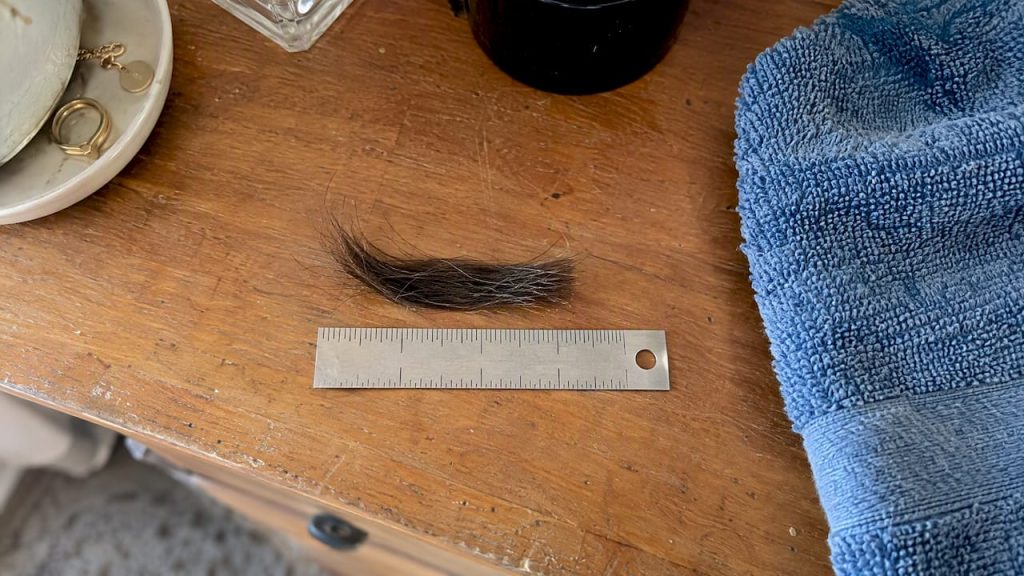
A standard scalp hair test typically detects drug use going back about 90 days, based on a 1.5 inch sample taken close to the scalp. Body hair can extend that window well beyond three months, and factors like hair color treatments, growth rate, and dose frequency shift the picture further. Laboratories rely on the Society of Hair Testing consensus for interpretation standards and confirm results with mass spectrometry, which is why the 90 day figure is a guideline rather than a hard rule.
TL;DR:
- New use may take 1 to 2 weeks to appear in hair because compounds must enter the growing shaft from the bloodstream.
- Body hair can reflect exposure for 6 to 12 months, but slower growth and longer resting phases make its timing less predictable than scalp hair.
- Urine is better for detecting very recent exposure, while hair testing is more sensitive to chronic or concealed use; the methods answer different timing questions.
- Tell the collector about recent bleaching or dyeing, since these treatments can lower detectable concentrations and affect interpretation of the result.
- The shampoo routine cannot guarantee a negative result; starting weeks ahead gives it more time to work than waiting until test day.
Table of Contents
- How Hair Drug Testing Actually Works
- Typical Detection Windows: Scalp Hair vs Body Hair
- What Changes Your Personal Detection Window
- Hair, Urine, Saliva, and Blood: Comparing Detection Windows
- How Samples Are Collected and What Results Mean
- Preparing for a Hair Test: What Actually Helps
- How We Can Help You Prepare
- FAQ
- Sources
- A Note From Our Detox Team
How Hair Drug Testing Actually Works
Drugs reach hair through more than one pathway. The main route is bloodstream deposition at the hair follicle, where circulating drug compounds and their metabolites bind into the growing hair shaft. Sweat and sebum around the follicle add a secondary layer, and some limited chemical change can happen inside the hair itself after that.
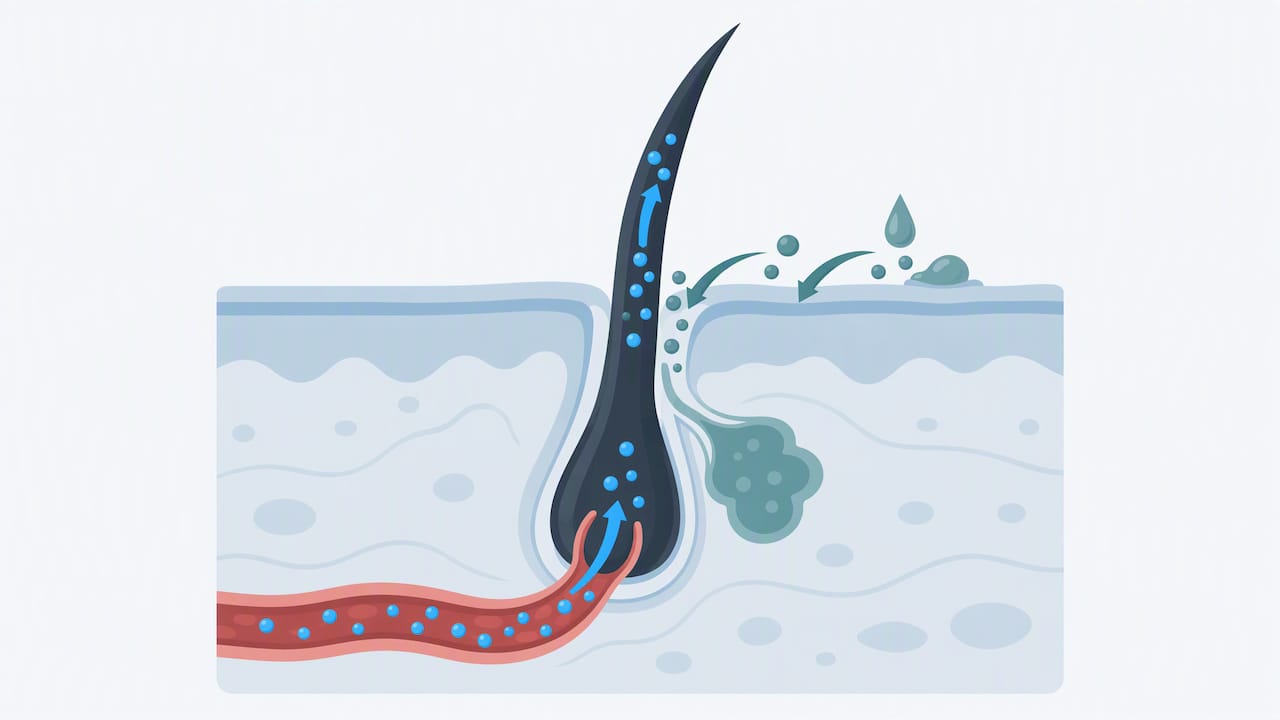
Labs do not simply look for a drug. They target specific markers chosen because they indicate actual use rather than surface exposure. For THC, that marker is often THCA, a metabolite that forms in the body rather than existing in the plant residue someone might brush against.
The workflow follows a consistent sequence:
- Decontamination washes remove surface residue before testing begins.
- An initial screening flags samples that warrant closer analysis.
- Confirmation testing uses LC-MS/MS or GC-MS, the gold standard methods referenced in SAMHSA’s guidance on hair metabolites.
That last step matters because mass spectrometry distinguishes parent drugs from metabolites with enough precision to support a legal or employment decision.
Typical Detection Windows: Scalp Hair vs Body Hair
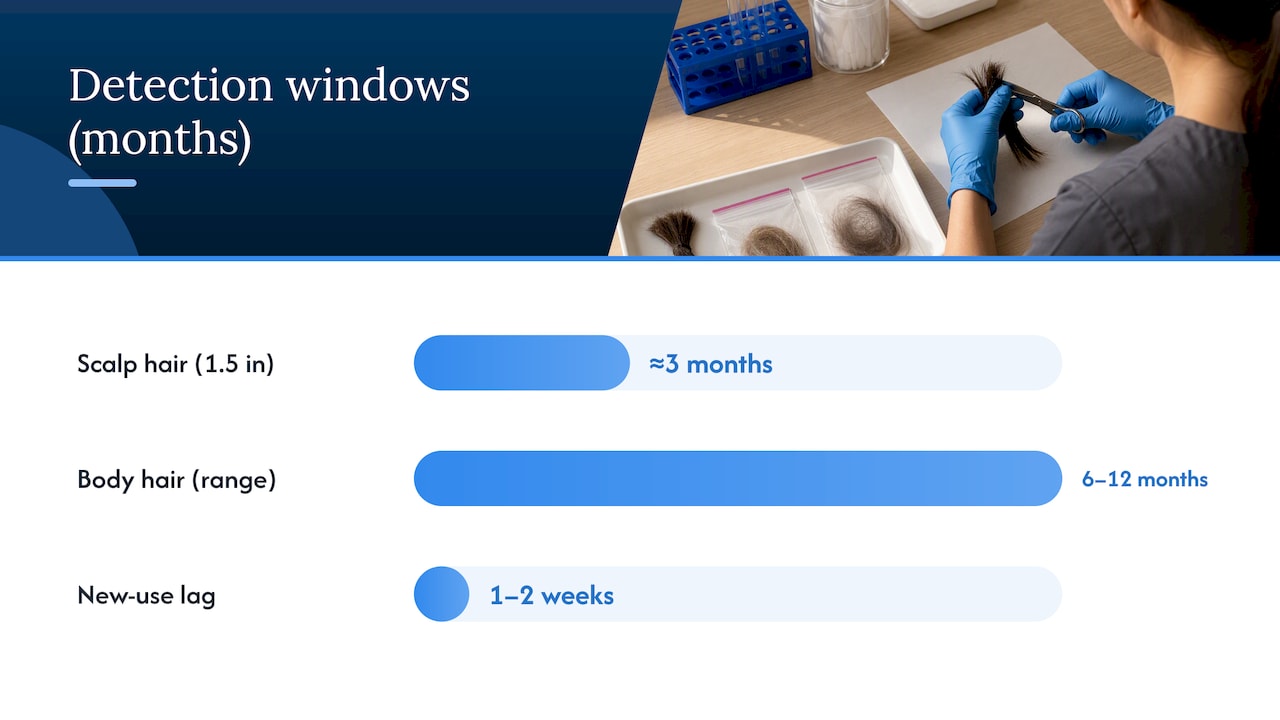
The 90 day estimate comes from basic math. Scalp hair grows at roughly half an inch per month, so a standard 1.5 inch segment taken near the root represents about three months of growth. That is the industry standard calculation labs and employers use when ordering a 90 day panel.
A 2025 systematic review found hair testing is more sensitive for chronic or concealed use, while urine remains better suited to catching very recent exposure. Comparative research on the two matrices supports treating them as complementary rather than interchangeable.
Two timing details matter for anyone estimating their own window:
- New use typically will not show up for 1 to 2 weeks after intake, because the drug has to travel through the bloodstream and incorporate into hair as it grows out of the follicle.
- Body hair grows more slowly and spends more time in a resting phase, which can push its detection window out to 6 to 12 months with far less precision than scalp hair offers.
Someone who used a substance yesterday will not fail a hair test tomorrow. The biology simply has not caught up yet.
What Changes Your Personal Detection Window
No two people clear a hair test on the same timeline, and several variables explain why.
- Hair follicles cycle through growth (anagen) and rest (telogen) phases, and the mix of the two varies by person and by body location, which is part of why body hair testing produces less predictable results.
- Heavier or more frequent use generally deposits more drug compound into the hair shaft, making detection more likely across a longer stretch of growth.
- Bleaching and coloring can reduce detectable concentrations somewhat, while dark, melanin-rich hair tends to bind certain drug compounds, particularly basic drugs, more readily than lighter hair.
- External contamination, such as being near secondhand smoke, is a real concern, which is exactly why labs run decontamination washes before confirmation testing.
Detection also depends heavily on drug class. Cannabis metabolites, opioids, cocaine, and amphetamines each bind and persist differently in the hair matrix, so a 90 day estimate is more reliable for some substances than others.
Pro Tip: If you have recently dyed or bleached your hair, mention it during any consultation. It can affect how a lab interprets your result and whether documentation is useful.
Hair, Urine, Saliva, and Blood: Comparing Detection Windows
Different test types exist because they answer different questions. Saliva and blood capture very recent use, measured in hours to a few days. Urine extends that to several days for most substances. Hair reaches back weeks to months, and nail testing can stretch even further given how slowly nails grow.
That spread explains common testing strategy:
- Employers running random or recent-use checks often choose urine screening because it reflects activity from the past few days.
- Programs trying to establish a longer behavioral pattern, such as custody cases or safety-sensitive industries, lean on hair because of its extended retrospective reach.
- Some situations call for combined testing, pairing a fast matrix like saliva with hair analysis to cover both recent and historical use in a single process.
Hair and urine are not competing methods so much as tools built for different timeframes.
How Samples Are Collected and What Results Mean
Scalp samples are typically cut close to the root, from the back of the head where hair is less visually noticeable once trimmed. Collectors documenting chain of custody record the cut and seal the sample to preserve its evidentiary value. At-home kits simplify this by walking you through a self-collection process, though lab-grade chain of custody differs from a workplace or court-ordered collection.
Results pass through two stages before anyone sees a final answer:
- An initial screen flags samples above a preliminary cutoff.
- Confirmation testing, which the SoHT consensus treats as essential, reruns the sample using chromatographic mass spectrometry to rule out false positives.
A confirmed positive indicates exposure crossed a defined cutoff, not a precise dose. Concentration in hair does not map cleanly to how much was consumed, which is part of why documenting recent cosmetic treatments or known contamination sources matters if you are disputing a result.
Preparing for a Hair Test: What Actually Helps
Hair testing’s long window makes timing the biggest variable you can influence, which is why understanding your situation early matters more than panicking close to a test date. We built the Macujo Method around that reality: a structured shampoo process using Aloe Rid Shampoo designed to work through the hair cuticle and strip residue that has bonded to the hair shaft, rather than relying on a quick surface rinse.
A few things are worth being clear-eyed about:
- The Aloe Rid Shampoo process targets residue on and within the hair shaft; it is a preparation method, not a guaranteed laboratory bypass.
- Cosmetic damage, growth rate, and how long you have been using all affect outcomes, the same variables that affect any hair test result.
- We pair product guidance with real consultation support rather than leaving you to guess at a protocol alone.
Pro Tip: Start a preparation routine as early as possible. A detox approach has more to work with over several weeks than it does the night before a test.
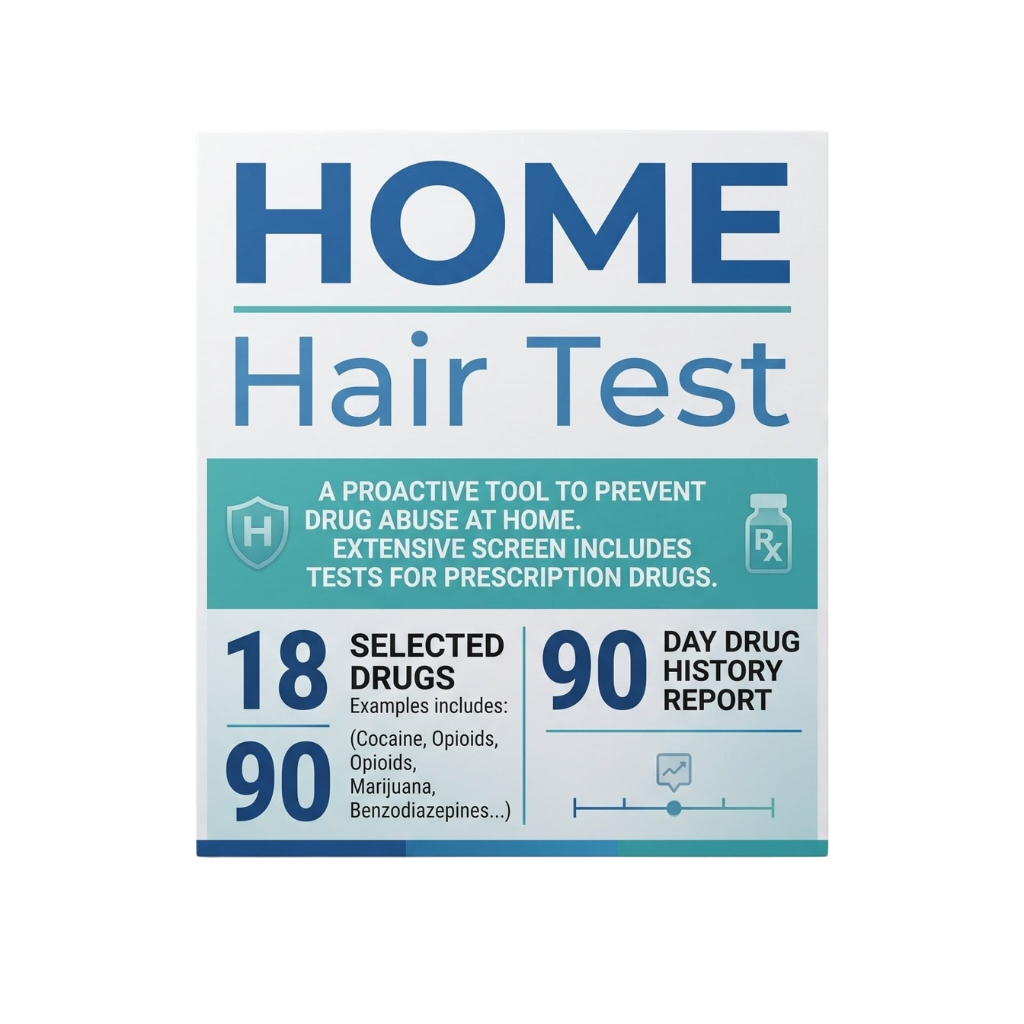
If you want to check your status before a real test, our at-home hair follicle test kit gives you a confidential read. For situations involving other matrices, our saliva test and urine dip card cover rapid screening and clinical-grade urine checks, respectively.
How We Can Help You Prepare
Experience shows personalized support is crucial when preparing for hair, urine, and saliva tests, rather than relying on generic product pages. If your situation is time-sensitive or complicated by recent cosmetic treatments, heavy use, or an upcoming test date you cannot move, a private consultation with Mike Macujo gets you a tailored plan instead of generic instructions.
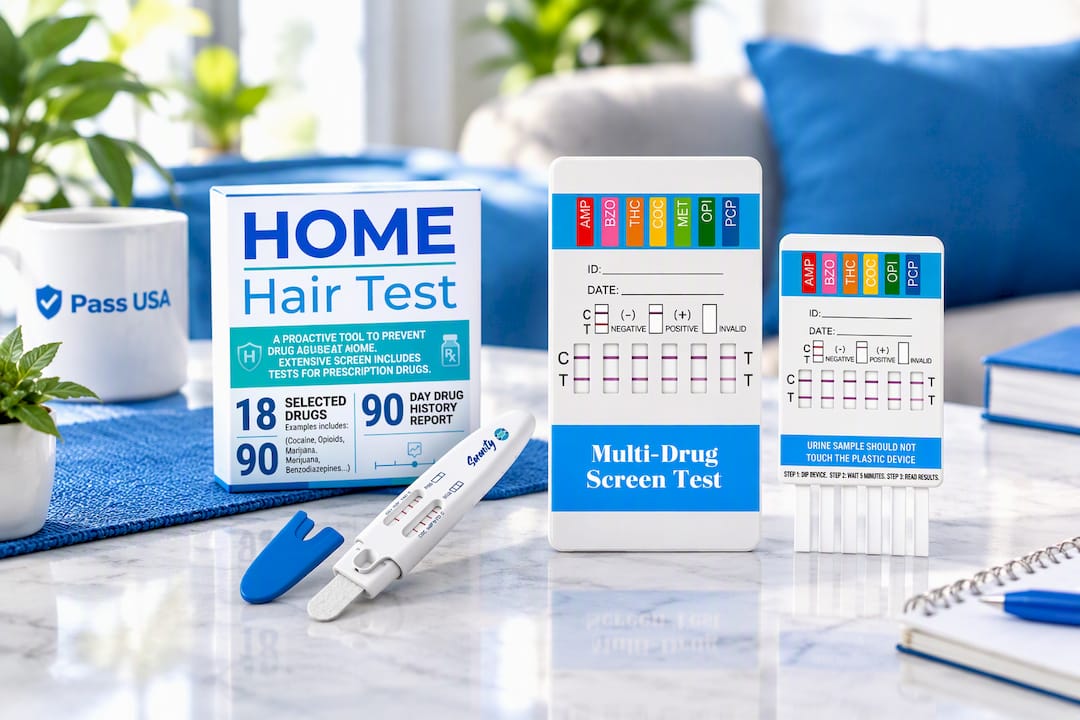
Beyond the consultation, a few resources let you act right now:
- Check your likely status with our at-home hair follicle test kit before a real test puts anything on the line.
- Cover saliva or urine scenarios with our oral fluid saliva test or 13-panel urine dip card.
- Browse our full range of hair, urine, and saliva test products to match a solution to your specific test type.
We do not promise guaranteed outcomes. What we offer is consultation until you have a real plan, built around your timeline and your situation.
FAQ
How far back can a hair test detect drug use?
A standard scalp hair test using a 1.5 inch sample detects use going back about 90 days, based on an average hair growth rate of roughly half an inch per month. Body hair can extend that window to 6 to 12 months, though with less precision.
What can throw off a hair follicle test?
Bleaching, dyeing, and other harsh cosmetic treatments can reduce the drug concentration detectable in hair, while external contamination from being near drug use can complicate interpretation. Labs address this with decontamination washing and confirmation testing, per SAMHSA guidance on the subject.
Can I pass a hair follicle test in 60 days?
A gap shorter than the roughly 90 day window a standard scalp sample covers means recent moderate-to-heavy use may still be detectable. Preparation during that time, including a structured shampoo protocol and avoiding further exposure, can meaningfully affect your result, though outcomes vary by individual growth rate and use history.
Can you pass a hair test in 2 months?
Two months is shorter than the typical 90 day detection window, meaning drug use within that period has a real chance of detection in a standard scalp test. Starting preparation immediately, rather than waiting, gives any detox approach more time to work before your test date.
Sources
- SoHT consensus on drugs of abuse hair testing (2021)
- Hair versus urine drug testing in forensic contexts — Scandinavian Journal of Family Medicine (2025 systematic review)
- Drug metabolites and hair testing — SAMHSA
A Note From Our Detox Team
Hair testing’s long memory feels intimidating, but it also means you have more time to prepare than a urine or saliva test allows. We have guided people through that preparation process for over two decades, and our consultations exist precisely for the moments when generic advice is not enough.
— Detox Experts