


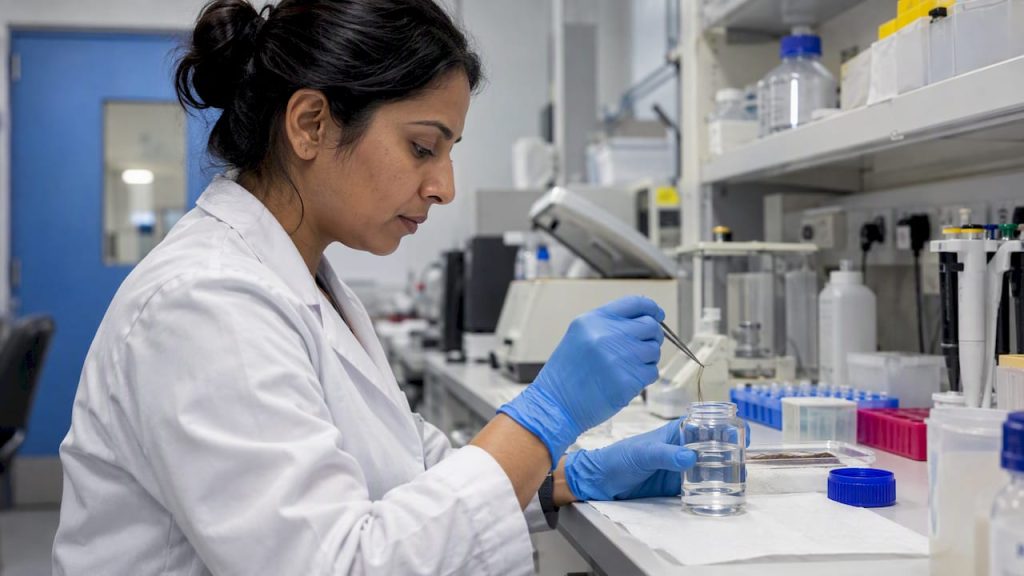
Yes, a hair test can come back positive when you have not used the drug, but it is less common than people fear, and the causes are specific. External contamination, a lab step that goes wrong, or a medication that was never reviewed are the usual suspects. Below we explain what really produces a false positive on a hair follicle test, how labs try to catch it, what to do if you get a result you dispute, and how to prepare your hair before a screening.
TL;DR
- A false positive on a hair test is rare but possible. The most discussed cause is external contamination from smoke, dust, powders, sweat or dirty surfaces.
- A presumptive positive should be confirmed by mass spectrometry, and in federally regulated programs a medical review officer (MRO) can weigh medical explanations.
- Hair color and cosmetic treatments can change what a lab measures, so they matter for both false positives and false negatives.
- If you dispute a result, contact the testing program and a qualified health care professional right away, and ask about confirmation and metabolite testing.
- If you want to prepare your hair before a test, we built our approach around the Macujo Aloe Rid Shampoo and a personal consultation.
Table of Contents
- What “false positive” means on a hair test
- What can cause a false positive
- Do hair dye and bleach cause a false positive?
- How labs screen and confirm results
- Our perspective
- Where a cleansing shampoo fits
- If you think the result is wrong
- What about urine and saliva tests?
- What a hair test can and cannot tell an employer
- FAQ
- Sources
What “false positive” means on a hair test
People use the phrase for three different situations, and they have different fixes.
- The lab reports a drug you never took. This is a true false positive. It can come from contamination, a mix-up, or a screening result that was never confirmed.
- The lab detects a drug you did take, but for a legitimate reason. A prescription is the classic case. The test is accurate, but the interpretation needs a medical review.
- The lab detects a drug you were only around. You did not ingest it, yet residue on the hair surface was measured.
The third case is the one that worries most people who are not drug users, and it is also where science is still unsettled. The National Institute of Justice notes that telling systemic drug use apart from external contamination remains a significant challenge, although looking for conjugated phase II metabolites can sometimes offer stronger evidence that a drug was actually ingested.
A hair result also tells a limited story. A review in the Journal of Applied Laboratory Medicine points out that there is no strong correlation between the dose someone took and the concentration in their hair. A positive says a substance was present. It does not say how much was used, how often, or exactly when.
What can cause a false positive
External contamination
Hair is porous and sits in the open air. The same review lists smoke, dust, aerosols, powders, sweat and dirty surfaces as ways a drug can end up on or in a strand without the person using it. Think of a roommate who smokes, a workplace where powders are handled, or a car and home where cannabis smoke lingers.
This is why labs wash hair samples before analysis. It is also why a lab washing step does not erase the question entirely. Some residue can be bound into the hair, and that is exactly the gap researchers are working on closing with metabolite analysis.
Hair color and melanin
Not every head of hair holds drugs the same way. The 2025 review reports that substances can bind more tightly to darker hair because of its higher melanin content, which can introduce bias. Two people with identical exposure may therefore produce different numbers. It does not create a positive out of nothing, but it shows why a hair result is not a perfectly level playing field.
Prescription medications
Some drugs on a hair panel are also legitimate medicines. Labcorp lists opiates, oxycodone and its related compounds among the substances it tests in hair. If you take a prescribed painkiller, a positive can be technically correct and still not mean misuse. In federally mandated programs, an MRO reviews, verifies and interprets positive results and evaluates medical explanations. Bring your prescriptions, dates and pharmacy records to that conversation.
Collection or lab error
Sample mix-ups, poor chain of custody and weak quality control are the least common explanations, but they are real. They are also the ones you can check. Ask for the laboratory’s accreditation and the paperwork showing how your sample was handled.
Do hair dye and bleach cause a false positive?
This is one of the most common questions, and the honest answer is: treatments change the result, but usually not by creating a drug that was not there. The review states that cosmetic hair treatments may affect the accuracy of hair toxicology results. Bleaching, perming, straightening and dyeing alter the hair structure, and that can shift how much of a substance a lab measures, most often downward but not always predictably.
Two practical points follow.
- Do not assume a fresh dye job protects you. Labs know about treatments, and an unpredictable result can raise questions rather than answer them.
- Tell the collector or MRO if your hair is treated. It is context that can matter if a result is later reviewed.
If you want more on how far back a strand reaches and why the number on the lab page can be misleading, our guide to the hair test detection window walks through it.
How labs screen and confirm results
A sound hair program does not stop at the first positive. The professional consensus from the Society of Hair Testing is clear that all presumptively positive screening tests must be confirmed using mass spectrometry. That confirmation step is what separates a screening hit from a reportable result.
In practice the chain looks like this:
- Collection. About 1.5 inches of head hair is typically cut close to the scalp. Labcorp says that length reflects drug use up to 90 days before testing.
- Washing. The sample is washed to remove surface residue.
- Screening. An initial immunoassay flags samples that may contain a drug.
- Confirmation. A flagged sample goes through mass spectrometry.
- Review. In regulated programs an MRO examines positives and any medical explanation before the employer sees a result.
We describe those lab steps in more detail in our explainer on the GC/MS drug test and MRO review. If the sample is not head hair, the rules change, and our page on body hair drug tests explains how the window and interpretation differ.
One limit is worth knowing. A positive hair test measures what is in the strand, and neither the screening nor the confirmation proves the route by which it got there. That is the reason the metabolite question keeps coming up in disputes.
Our perspective
We have spent more than 20 years helping people through drug screenings, and the pattern we see is consistent. Most people who contact us fall into two groups: those who have used and want to be prepared, and those who have not but are nervous about contamination or a medication. Both groups make the same mistake, which is waiting until the appointment is a day away.
Hair is the slowest test to plan for because the evidence sits in the strand, not in your bloodstream. So the sensible order is to understand your situation first, then prepare the hair, then keep a clean routine until collection. Our Macujo Method is built around that order, and the personal consultation exists because no two heads of hair, schedules or test types are identical.
We also tell people plainly what no product can do. Nothing guarantees a given lab outcome, and anyone who promises one is selling you a story. What good preparation does is remove avoidable risk: surface residue, product buildup and rushed decisions.
— Detox Experts
Where a cleansing shampoo fits
Can washing change a hair result? Research says it can influence the numbers. A study of commercially available products found that everyday shampoos and other tested products lowered THC concentrations in hair, sometimes to levels that could not be detected. Toxicology researchers also note that cleansing shampoos and extensive washing cannot be detected with available methods. That is encouraging for anyone worried about residue, but it is not a guarantee, and results vary with the person, the exposure and the lab.
This is the job our Macujo Aloe Rid Shampoo is designed for: a cleansing step used before a hair follicle test to help remove surface buildup and contaminants from your hair. It is most relevant in the exact scenario this article is about, when you worry that smoke, residue or a shared environment could show up on your strand.
A few habits make any cleansing routine work better.
- Start early. Begin well before the collection date, not the night before.
- Follow the instructions exactly. Timing, frequency and how long the product stays on the hair matter.
- Keep your environment clean. Wash hats, pillowcases and hair tools, and avoid smoky spaces, so you do not re-contaminate clean hair.
- Do not stack random products. Mixing harsh treatments can damage hair and make collection harder.
If you are a regular cannabis user rather than a bystander, the timeline is different, and our evidence-based THC hair detox plan lays it out step by step. Hair is also often the first thing to sort out when a job screening is coming, which is why we explain the sequence in our guide to pre-employment drug test laws and hair prep.
Get a plan built for your hair
You can browse our hair, urine and saliva products on the PassUSA home page, including the Macujo Aloe Rid Shampoo. If you would rather not guess, book a private consultation with Mike Macujo and we will build the routine around your test date, hair length and history. Our support continues until you pass your test.
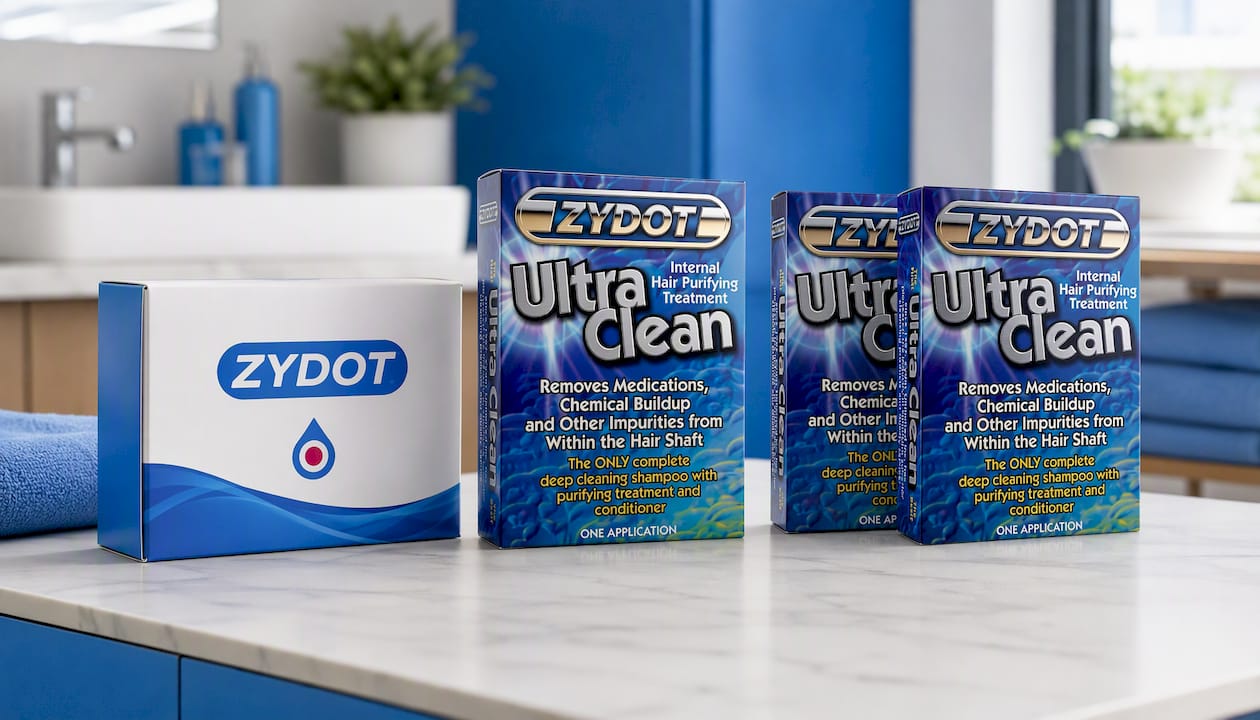
Want to know where you stand before you commit to anything? An at-home hair follicle drug test kit lets you check privately first.
If you think the result is wrong
Act quickly and in this order.
- Ask what was reported. Which substance, which test type, and was it confirmed by mass spectrometry?
- Request the MRO review if one applies. In federal programs this is where prescriptions and medical explanations are weighed.
- Gather your evidence. Prescriptions, pharmacy records, a list of environments where you spent time, and any hair treatments with dates.
- Contact the right people. NIDA advises that anyone concerned about screening results may consider contacting the drug-screening program or a qualified health care professional.
- Ask about metabolite analysis. Because researchers see conjugated metabolites as a promising way to separate use from contamination, it is reasonable to ask whether the lab can look for them.
- Consider legal advice. If an employment decision turns on the result, an employment attorney in your state can tell you what you may challenge, since rules differ by state and by employer.
Do not retest by grabbing random products and hoping. A new sample taken after a dispute is judged against the old one, and a sudden, unexplained change can complicate the story.
What about urine and saliva tests?
Hair gets the most attention for false positive worries because of its long window, but the other sample types have their own quirks.
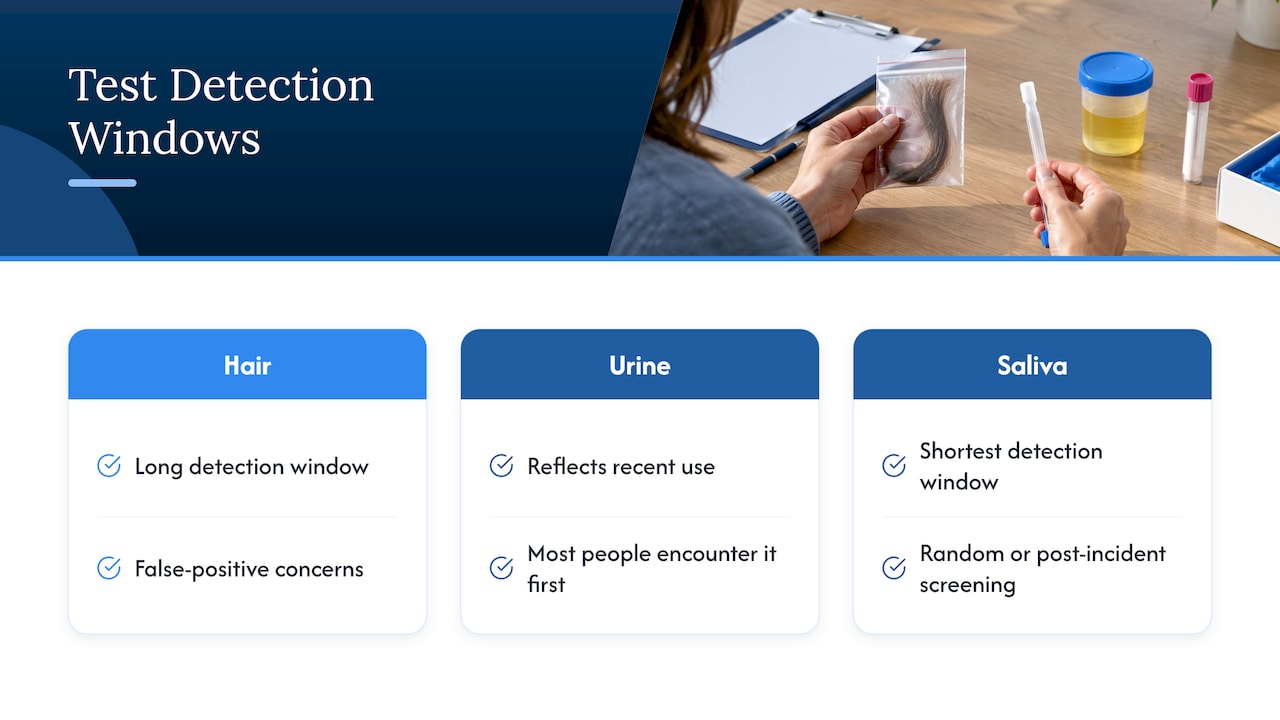
Urine. It reflects recent use, and it is the format most people meet first. A study of opioid users found that hair testing was less effective than urine testing at detecting past-month use of marijuana, benzodiazepines and methadone. In other words, the two methods do not simply agree, and each can miss or flag different things. Cutoff levels decide what counts as positive, and we break down the federal numbers in our guide to SAMHSA cutoff levels. If you are reading a home strip and the result looks odd, see our explanation of faint lines on a drug test.
Saliva. It has the shortest window and is common for random or post-incident screening. Preparation here is about timing and oral hygiene rather than the long game that hair requires.
We carry products for each format, including detox drinks, teas, a detox mouthwash and synthetic urine kits, and the consultation covers whichever test you face. For a broader view across substances, see our reference on how long drugs stay in your system and our drug detection times chart.
What a hair test can and cannot tell an employer
It helps to keep expectations realistic on both sides. A confirmed hair positive shows a substance in the strand. It does not show impairment, and it does not give an exact date. Labcorp’s own description says the test covers marijuana metabolite, cocaine, opiates, amphetamines and PCP, which is why anyone on a related prescription should say so early.
For a deeper look at how the process runs from the donor’s side, our page on drug testing hair follicle covers collection and what to expect on the day.
FAQ
Can a hair follicle test really be a false positive?
Yes, though it is uncommon. The usual causes are external contamination, an unreviewed prescription, or a lab or collection error. A mass spectrometry confirmation and an MRO review exist to catch many of these before a result is reported.
Does hair dye mess up a hair follicle test?
It can change the measured result, because cosmetic treatments affect the hair structure and may affect the accuracy of hair toxicology. It generally does not invent a positive, and it is not a reliable way to avoid one. Mention any treatments to the collector.
Can secondhand smoke make me fail a hair test?
It is possible for smoke, dust and aerosols to leave residue on hair, and researchers still struggle to separate that from actual use. Labs wash samples and can look for metabolites to help. If you live with a smoker, cleanse your hair and your surroundings well ahead of a test.
Can a shampoo help before a hair follicle test?
Research shows shampoos can reduce the amount of THC measured in hair, sometimes to non-detectable levels, but outcomes vary by person and by lab. Our Macujo Aloe Rid Shampoo is a cleansing step to use as directed and early, ideally with guidance from a consultation.
What should I do first if I get a positive I did not expect?
Ask whether it was confirmed by mass spectrometry, request an MRO review if available, and collect your prescriptions and records. Then speak with the testing program and a qualified health care professional. If a job is at stake, consider an employment attorney.
Sources
- Detecting Drugs in Hair: Is It Drug Use or Environmental Contamination? (National Institute of Justice)
- Review on Toxicology Testing in Hair (Journal of Applied Laboratory Medicine)
- Hair Follicle Drug Testing: Process and Benefits (Labcorp)
- Drug Testing (National Institute on Drug Abuse)
- 2021 SoHT Consensus on Drugs of Abuse Testing in Hair
- Manipulation of THC Hair Concentrations by Commercially Available Products
- Advances in testing for sample manipulation in clinical and forensic toxicology
- A comparison of the utility of urine and hair testing in opioid users